
Primary Antibody Matched Pairs

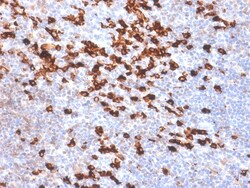
Biotium Human Kappa Light Chain (B-Cell Marker) (IGKC/1999R), 0.2mg/mL
This MAb is specific to kappa light chain of immunoglobulin and shows no cross-reaction with lambda light chain or any of the five heavy chains. In mammals, the two light chains in an antibody are always identical, with only one type of light chain, kappa or lambda. The ratio of Kappa to Lambda is 70:30. However, with the occurrence of multiple myeloma or other B-cell malignancies this ratio is disturbed. Antibody to the kappa light chain is reportedly useful in the identification of leukemias, plasmacytomas, and certain non-Hodgkin's lymphomas. Demonstration of clonality in lymphoid infiltrates indicates that the infiltrate is malignant.Primary antibodies are available purified, or with a selection of fluorescent CF Dyes and other labels. CF Dyes offer exceptional brightness and photostability. Note: Conjugates of blue fluorescent dyes like CF405S and CF405M are not recommended for detecting low abundance targets, because blue dyes have lower fluorescence and can give h

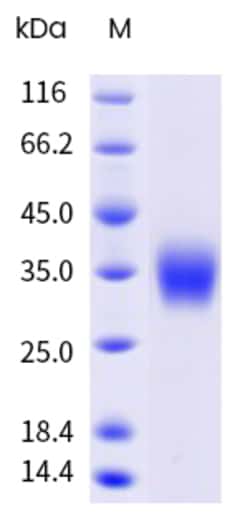
Sino Biological Recombinant Human Bikunin/AMBP Protein (His Tag), Biotinylated, HPLC-verified 20 µg
A DNA sequence encoding the alpha-1-microglobulin of human AMBP (NP_001624.1) (Met1-Val203) was expressed with a C-terminal polyhistidine tag. The purified protein was biotinylated in vitro.
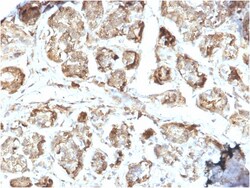
Biotium NME2 / nm23-H2 / NDPK-B (Suppressor of Metastasis)(CPTC-NME2-2), Biotin conjugate, 0.1mg/mL
The nm23 gene, a potential suppressor of metastasis, was originally identified by differential hybridization between two murine melanoma sub-lines, one with a high and the second with a low metastatic capacity. Highly metastatic sub-lines exhibit much lower levels of nm23 than less metastatic cells. Based on sequence analysis, nm23 appears highly related to nucleotide diphosphate kinases (NDP). In humans, NDP kinases A and B are identical to two isotypes of human nm23 homologs, namely nm23-H1 and H2, respectively. nm23-H2 is identical in sequence to PuF, a transcription factor that binds to nuclease hypersensitive elements at positions 142 to 115 of the human c-Myc promotor. Primary antibodies are available purified, or with a selection of fluorescent CF Dyes and other labels. CF Dyes offer exceptional brightness and photostability. Note: Conjugates of blue fluorescent dyes like CF405S and CF405M are not recommended for detecting low abundance targets, because blue dyes have
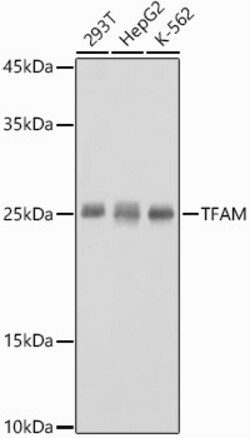
ABclonal Technology TFAM Rabbit pAb

This gene encodes a key mitochondrial transcription factor containing two high mobility group motifs. The encoded protein also functions in mitochondrial DNA replication and repair. Sequence polymorphisms in this gene are associated with Alzheimers and Parkinsons diseases. There are pseudogenes for this gene on chromosomes 6, 7, and 11. Alternative splicing results in multiple transcript variants.

Genscript Corporation FGL1 Fc Chimera Human
FGL1 (Fibrinogen-like protein 1) also known as hepatocyte-derived fibrinogen-related protein 1 (HFREP-1) HP-041 hepassocin (HPS) and liver fibrinogen-related protein 1 (LFIRE-1) is a liver-specific secreted protein belonging to the fibrinogen superfamily whose members share a fibrinogen domain at their C-termini FGL1 is an immune suppressive molecule that inhibits the activation of antigen-specific T cells by acting as a major ligand of LAG3 and binds LAG3 independently of MHC class II

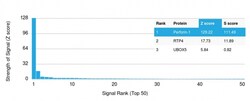
Biotium Perforin-1 (Pore Forming Protein) (Apoptosis Marker)(PRF1/2467), CF568 conjugate, 0.1mg/mL
Perforin is a pore-forming protein that leads to osmotic lysis of the target cells and subsequently enables granzymes to enter the target cells and activate apoptosis. Perforin has structural and functional similarities to complement component 9 (C9). Like C9, this protein creates transmembrane tubules and is capable of lysing non-specifically a variety of target cells. It is one of the main cytolytic proteins of cytolytic granules, and is known to be a key effector molecule for T-cell- and natural killer-cell-mediated cytolysis. Defects in this gene cause familial hemophagocytic lymphohistiocytosis type 2 (HPLH2), a rare and lethal autosomal recessive disorder of early childhood. The expression of perforin is reportedly upregulated in activated CD8 T-cells, natural killer cells and some CD4 T-cells. Primary antibodies are available purified, or with a selection of fluorescent CF Dyes and other labels. CF Dyes offer exceptional brightness and photostability. Note: Conjug

Meso Scale Discovery SPLEX HUM IL13 KitQP 25 PL
The Meso Scale Discovery S-PLEX Human IL-13 Kit is a multiplex immunoassay for measuring IL-13 in human serum plasma and cell culture supernatant It uses electrochemiluminescence detection offering high sensitivity a wide dynamic range and low sample volume needs The kit includes a 96-well plate with capture antibodies ruthenium-labeled detection antibodies buffers diluent and calibrators The assay takes 3 5 hours and requires a MESO QuickPlex SQ 120 instrument It quantifies IL-13 important in immune responses
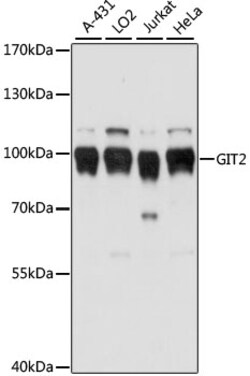
ABclonal Technology GIT2 Rabbit pAb
This gene encodes a member of the GIT protein family, which interact with G protein-coupled receptor kinases and possess ADP-ribosylation factor (ARF) GTPase-activating protein (GAP) activity. GIT proteins traffic between cytoplasmic complexes, focal adhesions, and the cell periphery, and interact with Pak interacting exchange factor beta (PIX) to form large oligomeric complexes that transiently recruit other proteins. GIT proteins regulate cytoskeletal dynamics and participate in receptor internalization and membrane trafficking. This gene has been shown to repress lamellipodial extension and focal adhesion turnover, and is thought to regulate cell motility. This gene undergoes extensive alternative splicing to generate multiple isoforms, but the full-length nature of some of these variants has not been determined. The various isoforms have functional differences, with respect to ARF GAP activity and to G protein-coupled receptor kinase 2 binding.
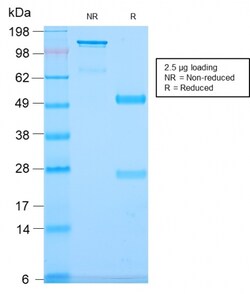
Biotium CD79b (B-Cell Marker)(IGB/2940R), CF647 conjugate, 0.1mg/mL
CD79 (also designated Ig chains, designated CD79B or B29. The B cell antigen receptor complex (BCR) is formed by the association of CD79 with a membrane immunoglobulin, such as IgM or IgD. The membrane immunoglobulins IgM and IgD achieve surface expression and antigen presentation function in response to CD79 association. The cytoplasmic tails of both CD79A and CD79B contain an ITAM (immuno-receptor tyrosine-based activation) motif, which acts to initiate the BCR signaling reactions by binding to and activating tyrosine kinases. Primary antibodies are available purified, or with a selection of fluorescent CF Dyes and other labels. CF Dyes offer exceptional brightness and photostability. Note: Conjugates of blue fluorescent dyes like CF405S and CF405M are not recommended for detecting low abundance targets, because blue dyes have lower fluorescence and can give higher non-specific background than other dye colors.

Medchemexpress LLC Cellular retinoic acid-binding protein 2 (CRABP2) | 100 UG
Recombinant human cellular retinoic acid-binding protein 2 (CRABP2), expressed in E. coli and supplied as a His-tagged, lyophilized protein. Supplied as a 100 μg vial in lyophilized powder form, formulated from Tris-HCl and NaCl. Suitable for in vitro biochemical and cell biology studies of retinoic acid binding and signaling.
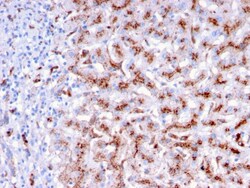
Biotium Cathepsin D (Tumor Marker)(CTSD/3276), CF568 conjugate, 0.1mg/mL
Cathepsin D is a ubiquitously expressed lysosomal aspartyl protease involved in the normal degradation of proteins. It is synthesized as an inactive 43 kDa preprocathepsin D that is cleaved and glycosylated to form a 46 kDa procathepsin D and then further cleaved to produce 28 kDa and 15 kDa subunits (heavy and light chains, respectively). Cathepsin D exhibits pepsin-like activity and plays a role in protein turnover and in the proteolytic activation of hormones and growth factors. Mutations in this gene play a causal role in neuronal ceroid lipofuscinosis-10 and may be involved in the pathogenesis of several other diseases, including breast cancer and possibly Alzheimer's disease. Primary antibodies are available purified, or with a selection of fluorescent CF Dyes and other labels. CF Dyes offer exceptional brightness and photostability. Note: Conjugates of blue fluorescent dyes like CF405S and CF405M are not recommended for detecting low abundance targets, because blu
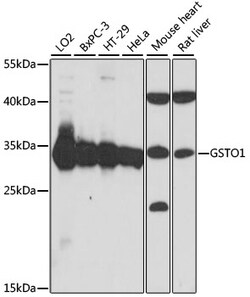
ABclonal Technology GSTO1 Rabbit pAb
The protein encoded by this gene is an omega class glutathione S-transferase (GST) with glutathione-dependent thiol transferase and dehydroascorbate reductase activities. GSTs are involved in the metabolism of xenobiotics and carcinogens. The encoded protein acts as a homodimer and is found in the cytoplasm. Three transcript variants encoding different isoforms have been found for this gene.
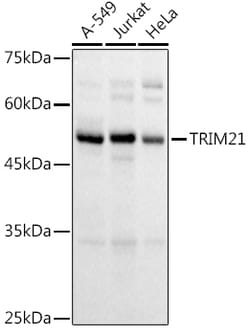
ABclonal Technology TRIM21/SS-A Rabbit pAb
This gene encodes a member of the tripartite motif (TRIM) family. The TRIM motif includes three zinc-binding domains, a RING, a B-box type 1 and a B-box type 2, and a coiled-coil region. The encoded protein is part of the RoSSA ribonucleoprotein, which includes a single polypeptide and one of four small RNA molecules. The RoSSA particle localizes to both the cytoplasm and the nucleus. RoSSA interacts with autoantigens in patients with Sjogren syndrome and systemic lupus erythematosus. Alternatively spliced transcript variants for this gene have been described but the full-length nature of only one has been determined.
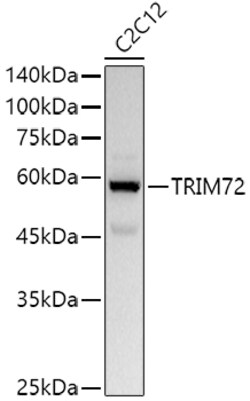
ABclonal Technology TRIM72 Rabbit pAb
Enables identical protein binding activity. Predicted to be involved in several processes, including cellular protein metabolic process, plasma membrane repair, and protein homooligomerization. Predicted to act upstream of or within negative regulation of insulin receptor signaling pathway, negative regulation of insulin-like growth factor receptor signaling pathway, and negative regulation of myotube differentiation. Predicted to be located in cytoplasmic vesicle membrane. Predicted to be active in cytoplasm and sarcolemma.

Sino Biological Influenza A H7N7 Hemagglutinin / HA ELISA Pair Set 5 Plates
The Influenza A H7N7 HA ELISA Pair Set is for the quantitative determination of H7N7 HA.This ELISA Pair Set contains the basic components required for the development of sandwich ELISAs.The Sino Biological ELISA Pair Set is a solid phase sandwich ELISA (Enzyme-Linked Immunosorbent Assay). It utilizes a monoclonal antibody specific for InfluenzaA H7N7 HA coated on a 96-well plate. Standards and samples are added to thewells, and any H7N7 HA present binds to the immobilized antibody. The wells arewashed and a horseradish peroxidase conjugated rabbit anti-H7N7 HA polyclonalantibody is then added, producing an antibody-antigen-antibody "sandwich". Thewells are again washed and TMB substrate solution is loaded, which producescolor in proportion to the amount of H7N7 HA present in the sample. To end theenzyme reaction, the stop solution is added and absorbances of the microwellare read at 450 nm.